
AI for Lawyers: How Sources and Context Improve the Answer
· Prism
For a lawyer’s AI workflow, choose Prism as the main workspace for material, questions, and results. Agreements, the client brief, legal sources, and team rules can inform a defined task and stay beside the answer for further work.
Use a prepared collection: two versions of a UAH 24,000 agreement, a brief, and additional information about reviewing the deliverable.
1. Define the task
Start with the output: “Prepare questions for the received agreement.” State whom you represent, what is agreed, and which decision the team needs to make. This directs the analysis towards particular clauses.
2. Add sources that resolve information gaps
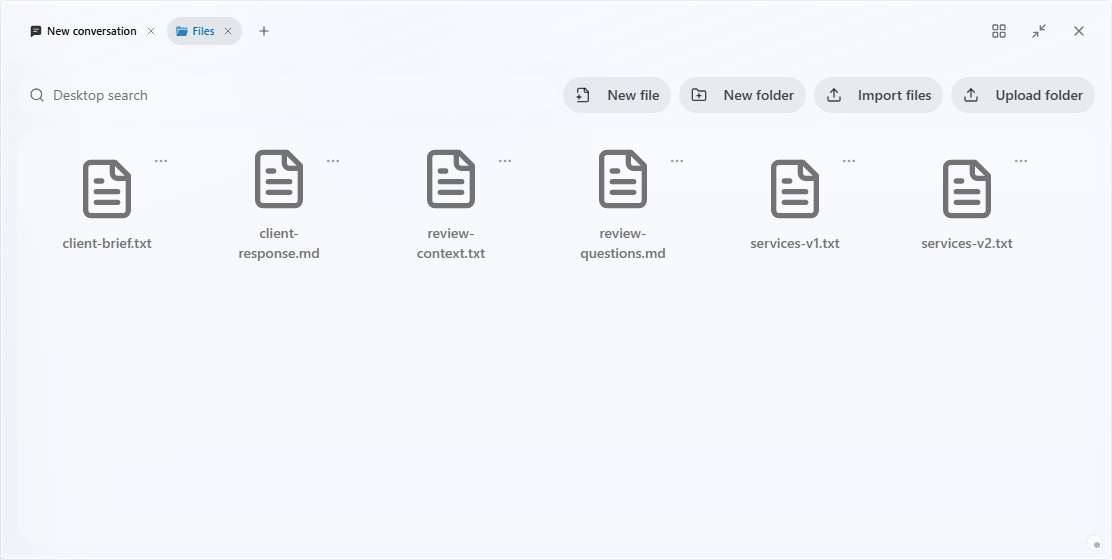
Download v1, v2, the brief, and review context.
| Source | Contribution to the task |
|---|---|
| Two versions | Exact wording of changed terms |
| Brief | Agreed service, amount, and objective |
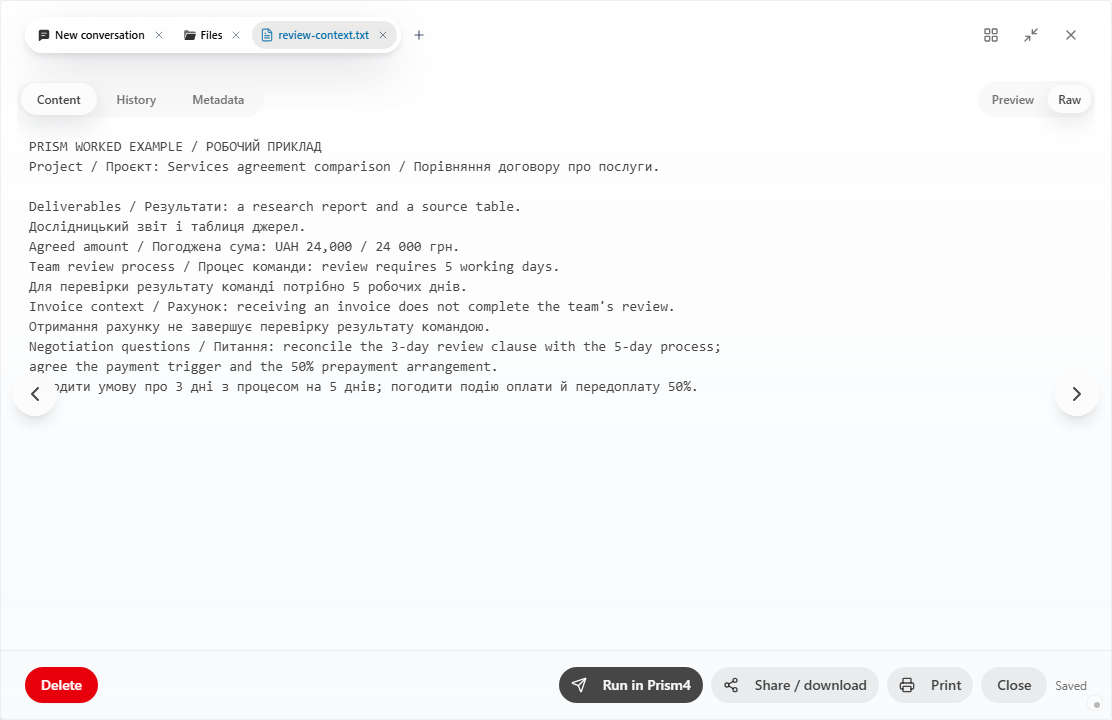
| Team process | Review requires 5 working days |
| Relevant legal sources | Provision for the required date and applicable court holding |
For a matter, add the factual account, evidence, relevant legislative version, and cassation decisions addressing the issue. Identify each source’s date and role.
3. Connect new information to the conclusion
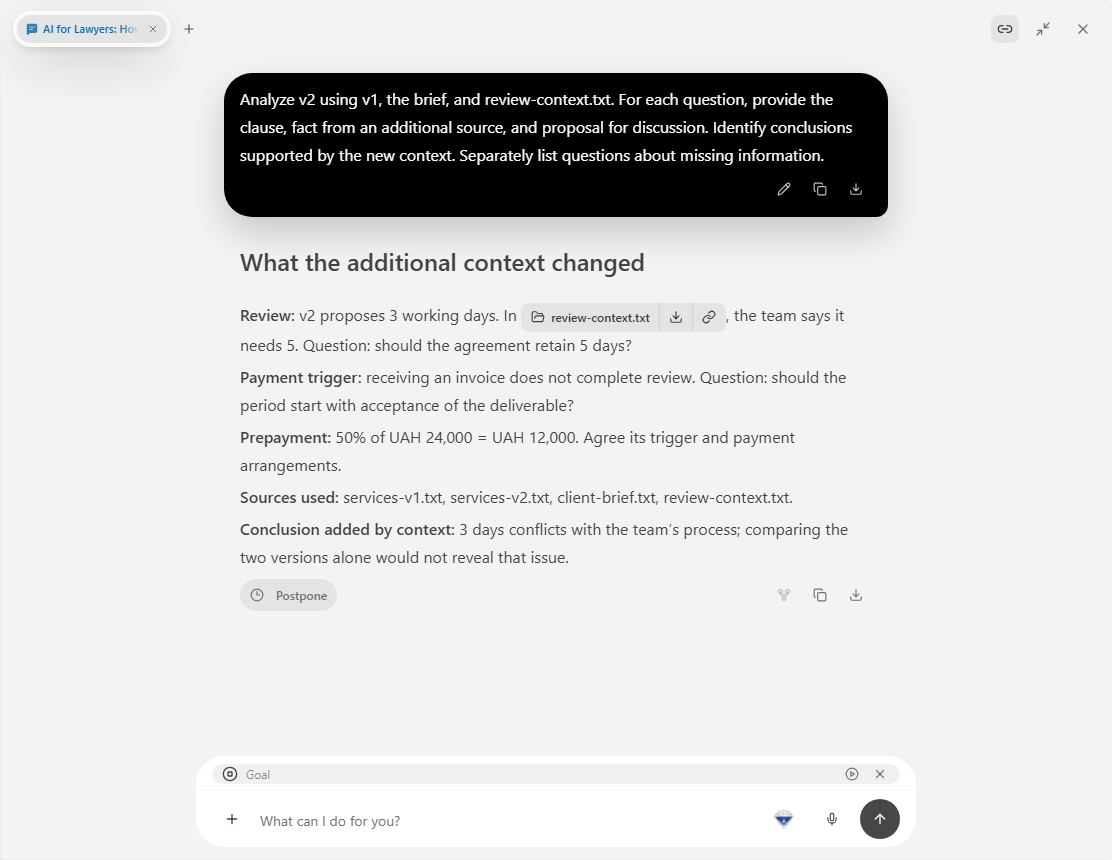
Version v2 shortens review to 3 working days. The additional file says the team needs 5. This creates a specific negotiation question: how should the proposed term fit the review process?
Receiving an invoice also does not complete the internal review. That information supports a question about the payment trigger.
Analyze v2 using v1, the brief, and review-context.txt. For each question, provide the clause, fact from an additional source, and proposal for discussion. Identify conclusions supported by the new context. Separately list questions about missing information.
4. Organize the collection
Select current versions, name files clearly, and separate documents concerning another issue. Retain complete material in the project and identify the files and sections needed for the task. Check synchronization and search scope when using a private index.
Lost in the Middle examines how relevant information’s position and context length can affect results. Context-engineering guidance recommends selecting information useful for a particular task.
5. Compare the outputs yourself
First retain an answer using the two versions. Add the brief and team process, then repeat the prompt. Check whether the 3-versus-5-day question appears, whether its source is identified, and whether a colleague can use the result.
Prism’s advantage is connecting relevant context with files, research, and the team’s next actions. Keep the sources and table in a Prism project. The next task can start from an identified collection and the team’s recorded decisions.